Masochist character structure keys for breakthroughs in Reichian therapy


The masochist character structure psychology emerges as a distinct and complex configuration within Wilhelm Reich’s five character structures. Deeply rooted in the body and psyche, it reveals how early developmental conflicts, particularly regarding autonomy and shame, shape enduring modes of being, bodily armor, and relational patterns. This structure often manifests as an “endurer” persona—tolerating discomfort, suppressing rage, and embodying a self-defeating style of interaction that can become chronic and challenging to transform without somatic awareness and therapeutic intervention. Understanding the masochist character requires attention to the interplay between repression of anger, the formation of characteristic body armor, and the lived experience of submission, compliance, and internalized shame. Anchored in Reichian analysis and enriched by bioenergetics, this exploration sheds light on why this character structure behaves as it does and how psychotherapists and individuals engaged in self-knowledge work can identify and support movement toward greater autonomy and embodied assertiveness.
The masochist character’s psychology is not merely a clinical curiosity; it reflects fundamental conflicts that inform how a person relates to themselves, others, and their own biology. It operates beneath the surface of conscious awareness, locked in the body's somatic defenses, and emerges in a persistent willingness to endure suffering as a means of gaining approval, avoiding conflict, or maintaining a fragile bond with caregivers. The intersection of character armor and molecular emotional residue creates a tension charged with resentment, guilt, and suppressed aggression, all embodied in muscular constriction and breathing patterns. Grasping this complex interplay enables therapists and students of psychology to appreciate the challenges in working with the masochist character, from breaking through somatic defenses to nurturing a healthy differentiation between submission and connectedness.
Before delving into the developmental origins and clinical manifestations, it is essential to frame the masochist structure within Reich’s overall theory of character organization and Lowen’s bioenergetic insights. This background is crucial to understanding how developmental, emotional, and energetic dimensions converge in the deep psychological patterning that defines the masochist character structure.
Situating the Masochist Character within Reich’s Five Character Structures
Wilhelm Reich’s pioneering work categorizes character into five distinct structures based on how early life experiences shape the ego and body-based defenses: schizoid, oral, psychopathic, masochist, and rigid. The masochist character structure occupies a middle ground between the oral and rigid types and is characterized primarily by the ambivalence between a desire for autonomy and an internalized experience of shame and rage.
Core Dynamics in Reichian Character Theory
Reich theorized that early childhood experiences—especially frustrations around the child's attempts to assert autonomy—forge deep-seated patterns of ego defense and somatic armoring. In the masochist structure, the fundamental conflict is the suppression of aggressive impulses toward authority figures or caregivers, whom the child still seeks to bond with despite feeling anger or betrayal. This suppression results in a paradoxical stance of submission accompanied by internalized hostility.
Unlike the psychopathic structure, which externalizes aggression, the masochist character turns it inward or masks it beneath compliance. The resulting character armor is less rigid and more permeable, allowing feelings of shame and guilt to perpetuate a self-defeating pattern of behavior that often feels compulsive and difficult to change.
Place in the Spectrum of the Five Structures
The five Reichian character structures represent responses to blocked biological and emotional energy, or “orgone energy,” as Reich called it. The masochist character’s armor is focused on the midsection and pelvis, representing an energetic and emotional “holding” of anger and rebellion beneath a mask of acquiescence. This character can be identified by a characteristic postural and energetic pattern that includes a lowered head, contracting muscles around the stomach, and a tendency to self-sacrifice or endure hardship silently.
It differs from the oral character, which is more dependent and needy, and from the rigid character, which is more overtly controlling and externally aggressive. The masochist’s unique interplay of submission and inner rebellion makes their dynamics particularly complex in therapy.
Developmental Origins of the Masochist Character Structure
Understanding the masochist character requires examining the early developmental tensions that fostered its formation. This includes the child’s struggle to assert autonomy amid environmental conditions that evoke shame and devaluation.
Autonomy Versus Shame: The Early Emotional Crucible
Reich identified the foundational conflict for the masochist character as the tension between a burgeoning sense of self and the need to comply with parental demands to avoid rejection or punishment. When a child’s assertive impulses are met with shaming or withdrawal of love, they internalize the message that expressing anger or independence is dangerous. This emotional wounding, if not healed, results in a pattern in which the child learns to “endure” rather than confront.
From a bioenergetic perspective, this process involves a chronic inhibition of natural energy flow—particularly aggressive energy—leading to muscular armoring in specific bodily regions. The stomach and pelvic muscles may tighten as both a defensive blockade and a container for anger and rage that the individual is too fearful to express.
Attachment Patterns and Relational Conditioning
Attachment theory complements this developmental map by showing how early caregiving relationships shape the internal working models that become the templates for later interactions. The masochist character often stems from an anxious-avoidant or disorganized attachment style. The child learns to maintain connection by suppressing discomfort and by enduring suffering silently, believing that this endurance secures love or connection.
This constellation creates a bio-psychological feedback loop in which emotional needs are subverted beneath a veil of self-silencing and compliant behavior. Children with this experience may grow into adults who have difficulty setting limits, asserting needs, or experiencing spontaneous joy and anger.
The Role of Early Trauma and Shame Internalization
Particularly critical in masochist formation is the specific type of early trauma where anger is met not just with punishment but deep shaming that implicates the child’s core identity. Shame is the relational wound that “splits” energy, making it difficult for the child’s authentic feelings to emerge safely. Consequently, the child turns inward, absorbs the blame, and builds a somatic shield that conceals rage and vulnerability.
Somatic Manifestations of the Masochist Character Structure
Direct observation of the body in therapy or clinical assessment reveals the body armor that corresponds to the masochist structure. This armor is not a metaphorical abstraction but a living, breathing reality of muscular tension, breathing patterns, and postural tendencies that echo the psychological landscape.
Typical Postures and Muscular Patterns
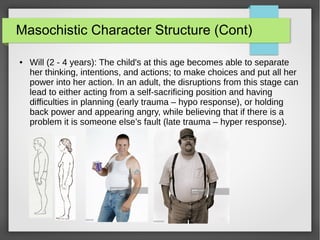
The masochist character’s body typically presents with a lowered head and somewhat collapsed chest, a posture that communicates vulnerability and submissiveness. The abdomen tends to be constricted, reflecting chronic contraction of the solar plexus and diaphragm muscles. Pelvic musculature is often tight or bound, impairing spontaneous movement and sexual energy expression.
This tension acts as a defensive blockade against expressing anger directly, essentially “locking in” the suppressed aggression and shame. Breathing is often shallow and restrained, limiting access to full emotional release and perpetuating feelings of fatigue or helplessness.
Respiratory and Energetic Characteristics
From an energetic perspective, the masochist character tends to have a blocked or irregular flow of vital energy—the orgone energy Reich described, or life energy in broader somatic traditions. Shallow thoracic breathing dominates, increasing a sense of vulnerability and passivity. The chronic restriction of breathing and muscular tension limits access to deeper feelings, leaving rage, grief, and desire stuck beneath the armor.
This undercurrent may manifest in clinically relevant symptoms such as migraines, digestive issues, chronic fatigue, or sexual dysfunction—physical expressions of internalized pain and repression.
Behavioral Expressions Rooted in Somatic Armor
Behaviorally, the “endurer” quality typical of the masochist character often shows in passivity, self-sacrifice, and a tendency to suppress dissenting opinions or complaints. This endurance is not merely psychological but deeply somatic: the body “prefers” to suppress energy rather than risk the conflict and shame it associates with authentic assertion. This somatic memory anchors submission in habitual patterns, making conscious change difficult without somatic intervention.
Relational Patterns and the Masochist Character
The masochist character ’s interpersonal world is shaped by the internalized dynamics of submission, shame, and suppressed rage. These patterns color both intimate and social relationships, often producing repeated cycles of self-defeating behavior.
Enduring in Silence: Why the Masochist Stays Quiet
The willingness to endure suffering without speaking up often functions as a protective strategy. The masochist fears that assertion or anger will rupture relationships or recreate the early experience of rejection and shame. This dynamic generates a paradox where silence serves to maintain connection at the cost of self-expression and autonomy.
Clinically, this can look like chronic people-pleasing, a pattern of passive-aggression, or a resigned tolerance of mistreatment. In therapeutic contexts, this silence can make it difficult for clients to articulate needs or boundaries until the armor begins to soften.
Masking Rage and Longing in Relationships
Behind the compliant exterior, suppressed rage and longing boil beneath the surface. These emotions may emerge as subtle resentments, depressive states, or self-sabotage. The masochist may unconsciously use endurance as leverage, hoping to evoke care or repair fractured attachment bonds. This internal conflict between submission and rebellion can generate relational ambivalence, cycles of closeness followed by withdrawal, or a compulsive neediness paired with hostile undercurrents.
Challenges in Intimacy and Autonomy
The masochist’s struggle with autonomy versus shame shapes the capacity for healthy intimacy. The impulse to submit conflicts with a deep desire for authentic connection, but fear of rejection inhibits expression of needs. This can lead to difficulties in establishing boundaries, expressing sexuality fully, or engaging in reciprocal care. Intimacy can become a battleground where past emotional injuries replay, often at a somatic level.
Therapeutic Interventions with the Masochist Character Structure
Effective therapy with the masochist character requires a nuanced approach that integrates Reichian character analysis, bioenergetic psychotherapy, and contemporary somatic methods. The goal is to gently dismantle body armor, unlock repressed energy, and facilitate access to the underlying emotions and needs shaped by early trauma and shame.
Recognizing and Working with Body Armor
The first step in therapy is identification of characteristic muscular and breathing patterns. Through bioenergetic exercises—such as grounding, breathing techniques, and expressive movements—clients can begin to regain control over suppressed energy and develop awareness of tension held in the midsection.
When the pelvic and abdominal armor begin to soften, clients often experience a surge of repressed emotions including rage, grief, and resentment. Safe containment and validation of these emotions are critical to ensure that the release is integrated and not overwhelming.
Facilitating Spontaneous Assertion and Healthy Anger
Therapeutic work emphasizes supporting the emergence of assertiveness as a natural extension of self-respect rather than aggression. This may involve role-playing, voice work, and guided affective expression that honors the client’s limits and avoids retraumatization. Somatic psychotherapy frameworks encourage the patient to experience healthy anger as an energizing, boundary-establishing force rather than a dangerous or shameful impulse.
Building Autonomy Without Shame Through Relational Repatterning
The relational dimension of therapy—often enacted through the therapeutic alliance itself—offers an opportunity to experience new forms of attachment free from abandonment or shaming dynamics. Gradual cultivation of trust, validation, and respectful boundaries enables internal reorganization whereby shame is replaced by pride and autonomy is recognized as compatible with connection.
Integrating mindfulness of bodily sensations alongside cognitive and emotional insight reinforces the process, creating a somatic resource for clients to draw on in difficult interpersonal situations.
Summary and Action Steps for Healing the Masochist Character
The masochist character structure psychology reveals a profile of deep internal contradiction: the persistent tension between submission and desire for autonomy, between suppressed rage and enduring love. Clinically, this manifests in characteristic body armor focused in the midsection, a pattern of enduring suffering silently, and relational dynamics that cycle through unspoken anger and shame. The structure forms through early developmental experiences that entwine autonomy with shame, shaping an unconscious bioenergetic contraction that inhibits emotional flow and authentic self-expression.
Healing begins with somatic awareness—recognizing and gently dismantling muscular and energetic armor to allow repressed feelings to surface safely. Therapy emphasizes development of healthy assertion, reclaiming anger as a boundary-setting force, and repatterning relational templates toward trust and mutual respect. Therapeutic modalities integrating Reichian analysis, Lowen’s bioenergetics, and somatic psychotherapy provide a powerful framework for this transformation.
For therapists and those in therapy, actionable steps include:

- Developing somatic mindfulness—attuning to body sensations to detect and engage the armor.
- Practicing controlled breathing and grounding exercises to reconnect with bodily energy.
- Creating safe spaces to express and contain anger, grief, and shame without fear of judgment.
- Working in the therapeutic relationship to experience non-shaming validation of autonomy.
- Supporting clients in practicing real-life assertiveness incrementally, expanding their tolerance for boundary-setting.
Ultimately, the path forward for the masochist character involves reclaiming the vital energy trapped beneath years of endurance, transforming silent suffering into empowered participation in life, and weaving autonomy and connection into a harmonious self-experience.